
Just a heads-up: this page may contain affiliate links. If you buy through them, we may earn a small commission at no extra cost to you. Learn more.
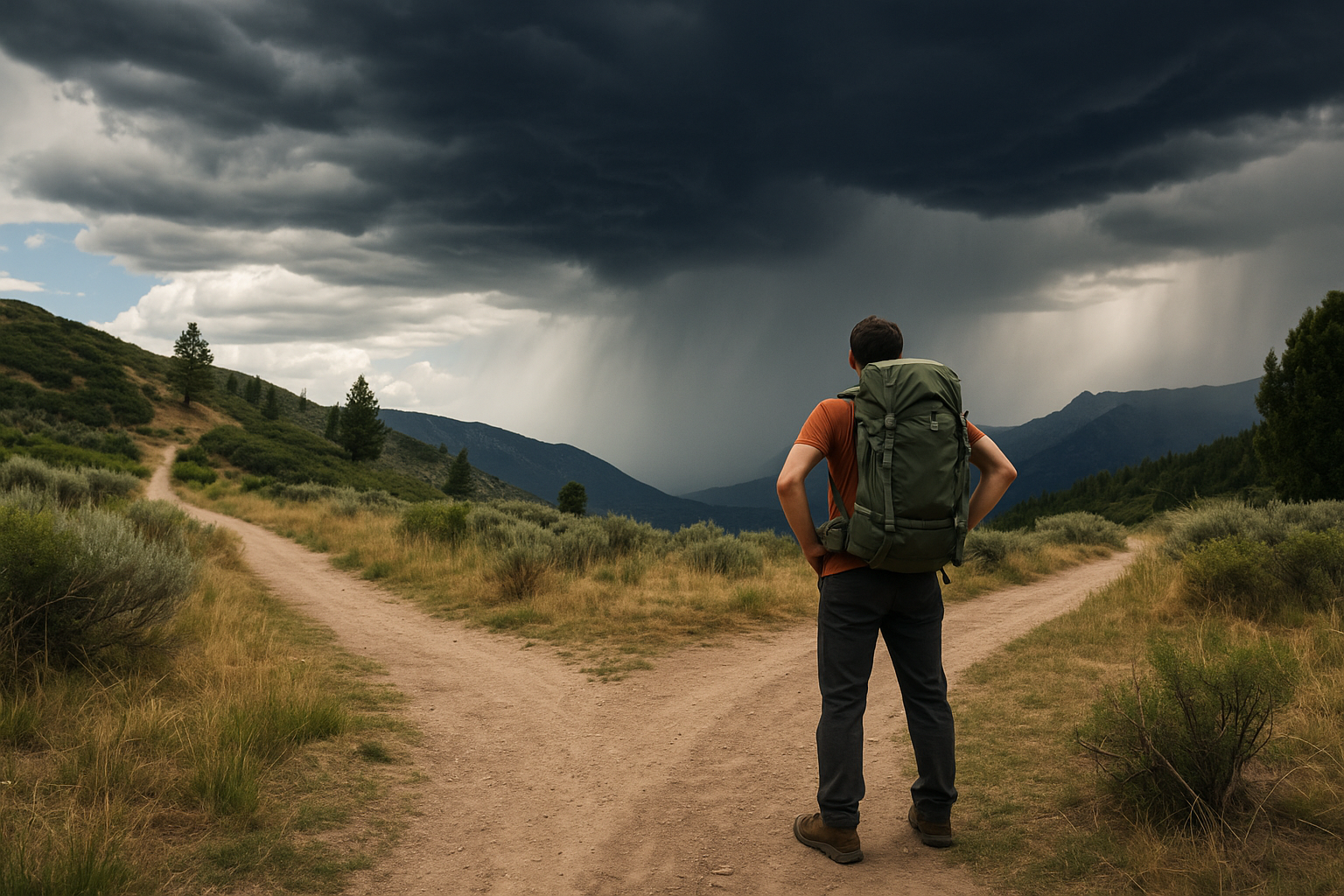
Even the most experienced hikers know one simple truth: sometimes the smartest thing you can do is turn back. Knowing when to turn back on a hike is not a sign of weakness. It’s a sign of awareness, maturity and respect for the trail and your safety.
For beginners, it’s tempting to push through. You set a goal, maybe a scenic overlook or a waterfall, and you’re determined to reach it. But nature doesn’t care about your schedule. Trail conditions, your body and even the weather can change everything in a moment.
Here’s how to recognize the red flags and make the right call to turn around confidently and without regret.
🌧️ 1. Weather Conditions Are Getting Worse
Sudden storms, thick fog, icy trails, or unexpected wind gusts can make even a simple path dangerous.
Turn back if:
- You see lightning or hear thunder within 10 miles
- Rain is soaking your gear and lowering your core temperature
- Fog makes it hard to see the trail or landmarks (On ridgeline hikes like Mount Philo in Vermont, fog can roll in fast and erase the trail—another good reason to turn around.
- Wind is strong enough to affect your balance or blow debris
Internal tip: Stay weather-ready with our hiking safety guide for sudden weather changes
🧭 2. You’re Lost or Second-Guessing the Trail
Getting disoriented is easier than you think. Missed trail markers, faded paths, or confusing forks can leave you unsure.
Turn back if:
- You haven’t seen a trail marker in over 20 minutes
- The terrain doesn’t match your map or app
- You’re relying solely on memory or guesswork
🧠 If in doubt, retrace your steps. Going back is safer than gambling forward.
💪 3. Your Body Is Sending Warnings
Pushing past your limits can lead to injury, dehydration, or worse.
Listen to your body:
- Are your legs cramping, or is your balance off?
- Are you dizzy, nauseous, or more tired than you expected?
- Are you sweating excessively or, worse, not sweating at all in the heat?
If your energy is drained or something feels “off,” it’s time to reassess.
⏱️ 4. It’s Getting Late — Fast
Misjudging how long a trail will take is one of the most common beginner mistakes.
Turn back if:
- You’re only halfway through and daylight is fading
- You didn’t pack a headlamp or flashlight
- You’re unfamiliar with the trail and don’t want to navigate in the dark
Pro tip: Always set a “turnaround time” before your hike. If you don’t reach your goal by then, turn back — no matter what.
🌲 5. You’re Unprepared for What’s Ahead
Sometimes you realize too late that you didn’t pack what you needed.
Red flags include:
- No rain gear and clouds rolling in
- No food left and still miles to go
- Not enough water for the return
- No signal or battery power left on your device
If your supplies can’t support the rest of the hike, it’s time to head back.
👨👩👧 6. Someone in Your Group Isn’t Doing Well
If you’re hiking with others, especially kids or beginners, watch for early signs of distress.
Turn back if:
- Anyone is lagging significantly or looks exhausted
- A child is complaining of cold, hunger, or fear
- Someone is favoring an ankle or showing signs of a fall
Group hikes are only as strong as the slowest member. Prioritize the group’s safety over the summit.
🎒 What to Pack to Avoid a Forced Turnaround
To avoid surprises, always carry:
- Navigation tools (map, compass, or GPS)
- Rain jacket and emergency layers
- Extra food and water
- Fully charged phone or power bank
- Headlamp or flashlight
- First-aid kit
For a complete gear guide, check out our essential hiking gear for beginners
💡 Final Thought: Know When to Say “Not Today”
Knowing when to turn back on a hike isn’t about quitting. It’s about honoring your instincts, your preparation, and your personal safety. Trails will always be there. You only get one life to enjoy them.