
Just a heads-up: this page may contain affiliate links. If you buy through them, we may earn a small commission at no extra cost to you. Learn more.
Even short hikes in mild conditions can turn into dangerous experiences when you’re dehydrated. In summer, the stakes climb even higher. Whether you’re tackling a beginner trail or a weekend backcountry loop, hydration while hiking is one of the most critical and underestimated factors for safety and performance.
Let’s break down why water matters so much, how much you really need and smart ways to stay hydrated on the trail.
💧 Why Hydration While Hiking Matters
Hiking causes your body to lose water fast through sweat, respiration and even talking. When you’re even slightly dehydrated, your body starts to perform worse. You get tired more quickly, your coordination suffers and your judgment declines—dangerous on any trail. For instance, on exposed trails like Utah’s Silver Lake Loop, hydration is even more crucial due to limited shade.
The risks of dehydration include:
- Headaches and dizziness
- Muscle cramps and poor balance
- Heat exhaustion or heatstroke
- Confusion, irritability, and poor decision-making
🧠 According to the Journal of Athletic Training, even 2% dehydration can impair physical performance and cognitive function.
🔥 Summer Hiking? Double the Caution
High temperatures and sun exposure accelerate fluid loss especially on exposed ridgelines or desert trails. You may not notice how much you’re sweating, especially if it evaporates quickly in dry climates.
In hot weather, always:
- Start early to beat midday heat
- Drink small amounts regularly, not all at once
- Monitor your urine color: darker = dehydrated
- Eat snacks that include salt and carbs to help absorption
🚰 How Much Water Should You Bring?
A common guideline is half a liter (17 oz) per hour of moderate hiking in moderate conditions. In hot weather, this can increase to 1 liter (34 oz) per hour or more.
But don’t just guess—consider:
- Trail length and difficulty
- Temperature and humidity
- Your personal sweat rate
- Access to refill stations or streams
💡 For longer hikes, consider bringing electrolyte tablets or a hydration mix to replenish lost minerals.
🎒 Best Ways to Carry Water on the Trail
There’s no one-size-fits-all. What matters is that water is easily accessible and that you’re reminded to drink regularly.
Popular options include:
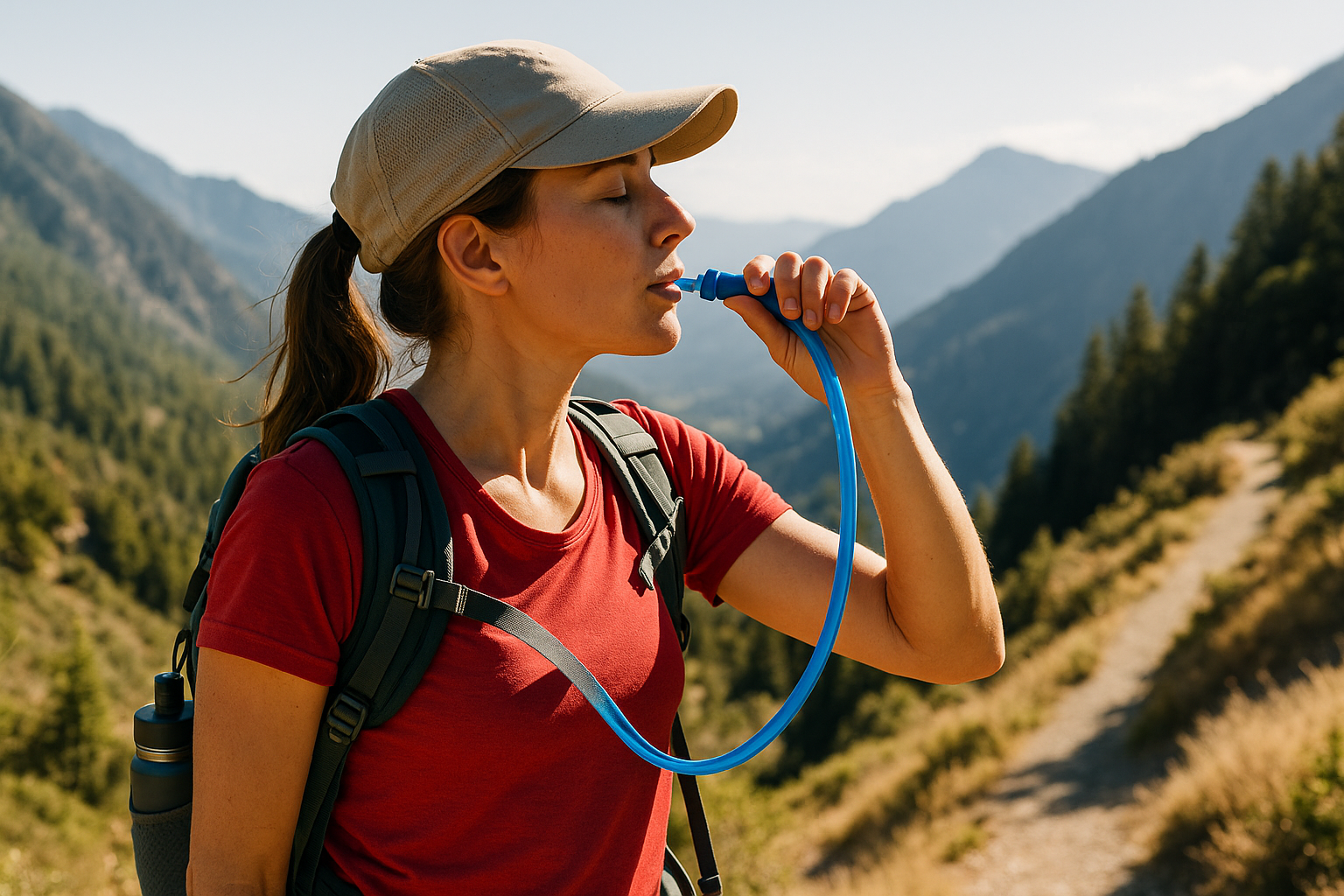
- Hydration bladders (2–3L): Great for hands-free sipping
- Insulated bottles: Keep liquids cool longer on hot days
- Collapsible bottles: Light and space-saving once empty
Carrying extra? A simple bottle in your side pouch can be a backup or electrolyte-mix carrier.
🏞️ What About Natural Water Sources?
If you’re planning to refill from streams, lakes, or springs, always purify the water first no matter how pristine it looks.
Purification options:
- Lightweight water filters (e.g., Sawyer Squeeze)
- UV sterilizers
- Water purification tablets (as backup)
⚠️ Giardia, bacteria and other pathogens are invisible and they will ruin your hike.
🛠️ Hydration While Hiking: Pro Tips
- Pre-hydrate before hitting the trail, especially in heat
- Set a timer or drink every 15–20 minutes during your hike
- Eat watery snacks like oranges or cucumbers
- Don’t wait until you’re thirsty—by then, it’s already too late
- Train with your gear: Get used to how your pack fits with full hydration weight
💡 Final Thought
The best hiking gear in the world won’t help you if you’re dehydrated. Staying on top of your hydration while hiking especially in summer is one of the most powerful ways to protect your body, think clearly and enjoy the trail. Pack smart, sip often and hike strong.