


Just a heads-up: this page may contain affiliate links. If you buy through them, we may earn a small commission at no extra cost to you. Learn more.
If you’re wondering about hiking for beginners with bad knees, know that it’s possible to enjoy the outdoors safely and comfortably. With the right trails, gear and techniques, you can protect your joints, build strength and make hiking a regular part of your life even if your knees have given you trouble in the past.
Why? Because hiking, at the right pace and on the right trails, builds muscle strength around the joints, improves flexibility and enhances circulation, all vital to knee health. It also engages your mind and spirit, giving you a sense of accomplishment that no gym workout can match.
The secret is starting with respect for your body’s limits and layering in smart choices: from where you hike to what you wear to how you move.
Start on Trails That Protect Your Knees
Not all trails are created equal, especially when knees are involved. Your best bets are:
- Smooth, stable surfaces: Dirt, packed gravel, or even raised boardwalks reduce impact compared to rocky or root-strewn paths.
- Minimal elevation changes: Avoid steep climbs and descents. Gentle slopes build strength without overstressing joints.
- Shorter loops: Start small. A mile or two is plenty to build confidence and endurance without overload.
Here are four excellent beginner-friendly hikes from novice2hiking.com that fit the bill:
- Moss Rock Preserve Trail, Alabama: A calm forest trail with well-maintained paths and gentle terrain.
- Boardwalk Loop, Congaree National Park, South Carolina: Raised wooden boardwalks create a shock-absorbing surface, perfect for sensitive knees.
- Silver Lake Loop, Utah: Easy rolling terrain in a scenic canyon setting, with well-groomed trails.
- Minnehaha Falls Trail, Minnesota: Smooth, wide paths with breathtaking waterfalls, all at a leisurely pace.
Gear That Makes a Difference
If your knees hurt, footwear can be your best friend or your worst enemy. Invest in hiking shoes or boots that provide ample cushioning, arch support, and a stable sole. Avoid stiff or worn-out shoes that transmit every bump and jolt directly to your joints.
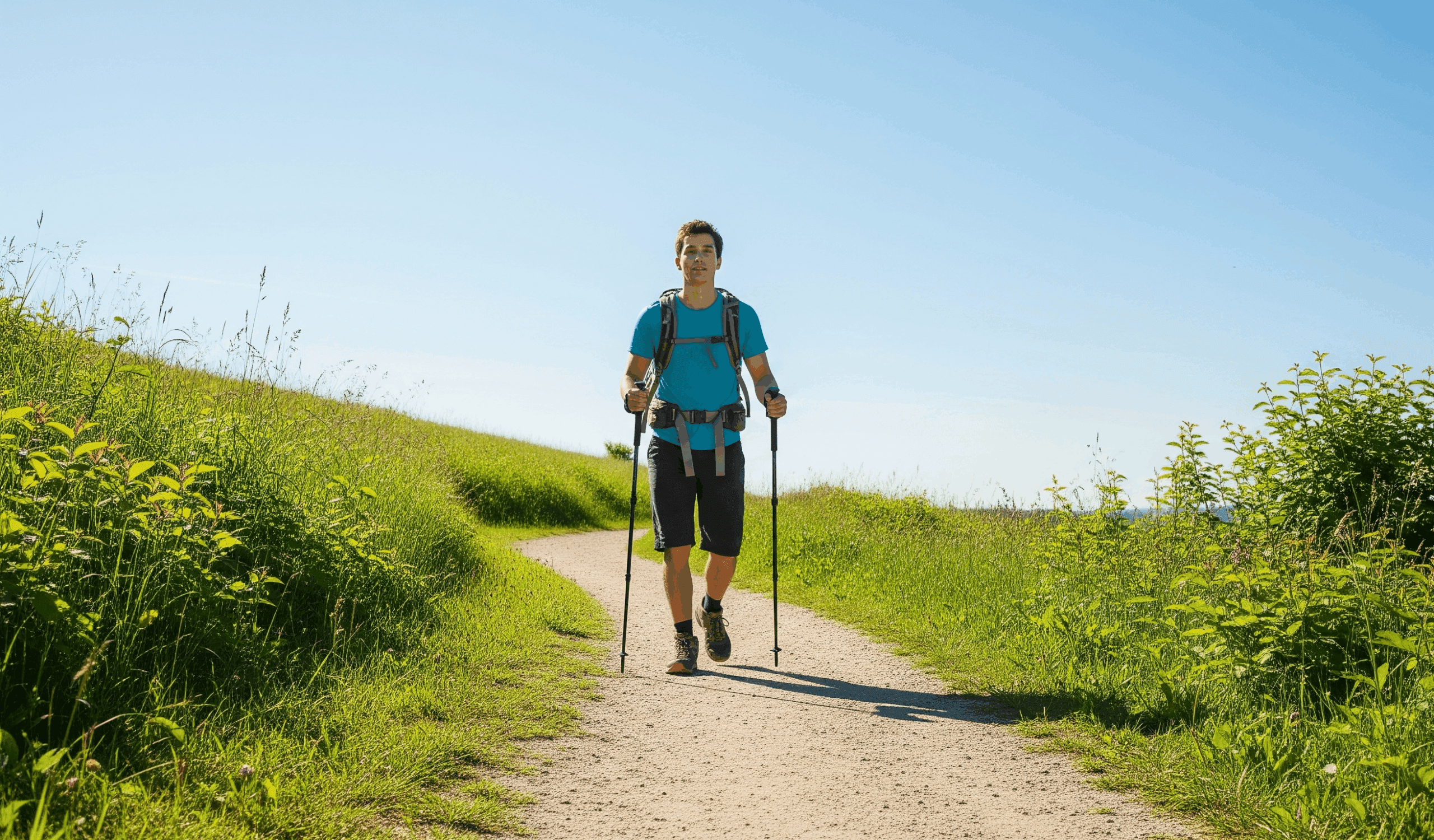
Trekking poles are a game-changer. They redistribute your weight, taking pressure off your knees and improving balance especially on downhill stretches where most knee pain occurs.
Compression sleeves or lightweight braces provide gentle support and warmth, helping reduce swelling and fatigue.
Technique Matters More Than Speed
Slow down. Focus on smooth, controlled steps rather than pace or distance. Use shorter strides and avoid locking your knees when walking downhill. Engage your core and hips to share the load, which protects your knees.
Warm up before hitting the trail with dynamic stretches targeting your quads, hamstrings and calves. After your hike, stretch again and consider icing your knees if there’s any inflammation.
Listen and Adapt
Not all pain is equal. Mild soreness after a hike can be a sign of strengthening muscles, but sharp or worsening pain means it’s time to stop and rest. Don’t ignore your body’s signals.
As you build strength and confidence, you can slowly increase your distance and trail difficulty. Patience is your ally here.
Final Thought: Why Hiking with Bad Knees Is Worth It
Beyond physical benefits, hiking nourishes your mental health and reconnects you with nature. The fresh air, sunlight and quiet of the trail have proven mood-boosting effects. Every step forward, no matter how small, is progress. A win against the limitations knee pain tries to impose.
You don’t have to be fast or cover miles. Even gentle, mindful hikes on beginner-friendly trails can change your relationship with your knees and your body for the better.