
Just a heads-up: this page may contain affiliate links. If you buy through them, we may earn a small commission at no extra cost to you. Learn more.
When you head out on your first hikes, snacks are not a luxury — they’re a simple form of trail insurance. Hiking snacks for beginners should do three things: provide quick fuel when you feel a slump coming, offer longer-lasting calories so you don’t crash later and survive being jostled in a daypack until you’re ready to eat. Pick the wrong foods and the trail becomes a chore; pick the right ones and the hike stays fun.
🍎 What hiking snacks for beginners should actually do
For beginners, the goal is not performance-level fueling. It’s consistent comfort. A snack that spikes your energy with pure sugar will give you a quick lift and then leave you worse off. What you want instead is a mix: something that kicks in fast (simple carbs) plus something that stays with you (protein or healthy fat). That balance translates into steady legs and a calmer mind on the return walk. On familiar local loops like the Moss Rock Preserve trail in Alabama, you can test how different combinations feel and learn to read your own signals.
🥜 A few real, practical snack ideas (no hype)
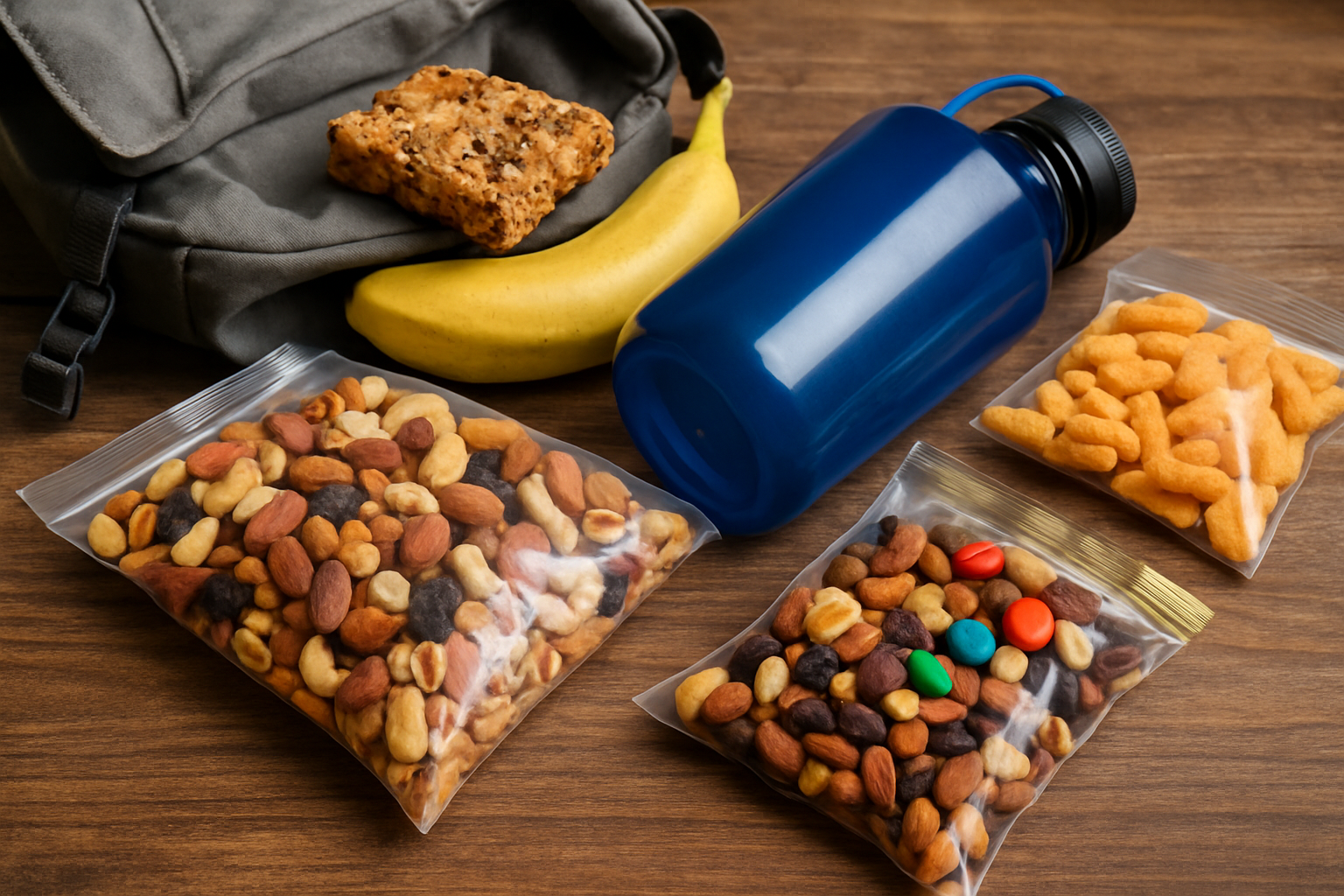
Think portable, non-melty, and satisfying. A small handful of trail mix blends quick sugars and fats; nut-butter squeeze packs are compact protein bombs; dense, whole-grain bars keep you going through steady climbs; and dried fruit gives a rapid, natural sugar hit without refrigeration. If you prefer savory, firm cheese or jerky supplies long-lasting protein and can be especially useful on longer half-day hikes. Try these options on different outings. For example, bring a nut-butter packet and an energy bar on the Pinelands Trail at Cape Henlopen, Delaware to see which keeps you feeling best.
⏱ Timing and portioning for steady energy
Don’t wait to eat until you feel exhausted because that’s when the body is already in a deficit. For most beginners, a rhythm of a small bite every 45–75 minutes works well: a quick sugar snack first, then a more substantial protein or fat-based bite when you need more staying power. Drink water with each snack; the combo of carbs plus fluid helps absorption and keeps you from confusing thirst with hunger. On longer trails such as the Minnewaska Loop Trail in New York, spacing out your snacks this way will help you avoid the late-hike slump and enjoy the views instead of the fatigue.
🎒 How to carry and protect your snacks
Placement matters. Keep snacks where you can reach them without unpacking: hip-belt pockets, the top lid, or an easy-open front pocket. Use resealable bags to contain crumbs and odors. In areas with a lot of wildlife activity for instance when you pause on a wooden bench along the Mirror Lake Loop in Yosemite pack out all wrappers and avoid leaving scraps behind; even “biodegradable” peels can alter animal behavior. For heat-prone summer hikes, bring denser, heat-tolerant snacks (nuts, jerky) rather than soft chocolate or pillowy candy.
⚕️ Special considerations: allergies, digestion and testing at home
If you have allergies, read labels and carry medication. If trail digestion is a concern, test potential snacks at home during a brisk walk before trusting them miles from the car. Beginners often don’t realize how different their stomach reacts under exertion; a small experiment on an easy route such as the Lake Henry Loop in Kansas will save you an uncomfortable surprise later.
🌄Final thoughts
Packing the right hiking snacks for beginners is a low-effort, high-return habit. The goal is simple: keep energy steady, minimize fuss, and avoid food-related distractions so you can focus on the trail and the company around you. Try a few combinations over several short hikes, learn what each does for your body, and build a snack routine that fits your pace and tastes. With that small habit in place, the miles will feel better and the scenery will be easier to enjoy.