
Just a heads-up: this page may contain affiliate links. If you buy through them, we may earn a small commission at no extra cost to you. Learn more.
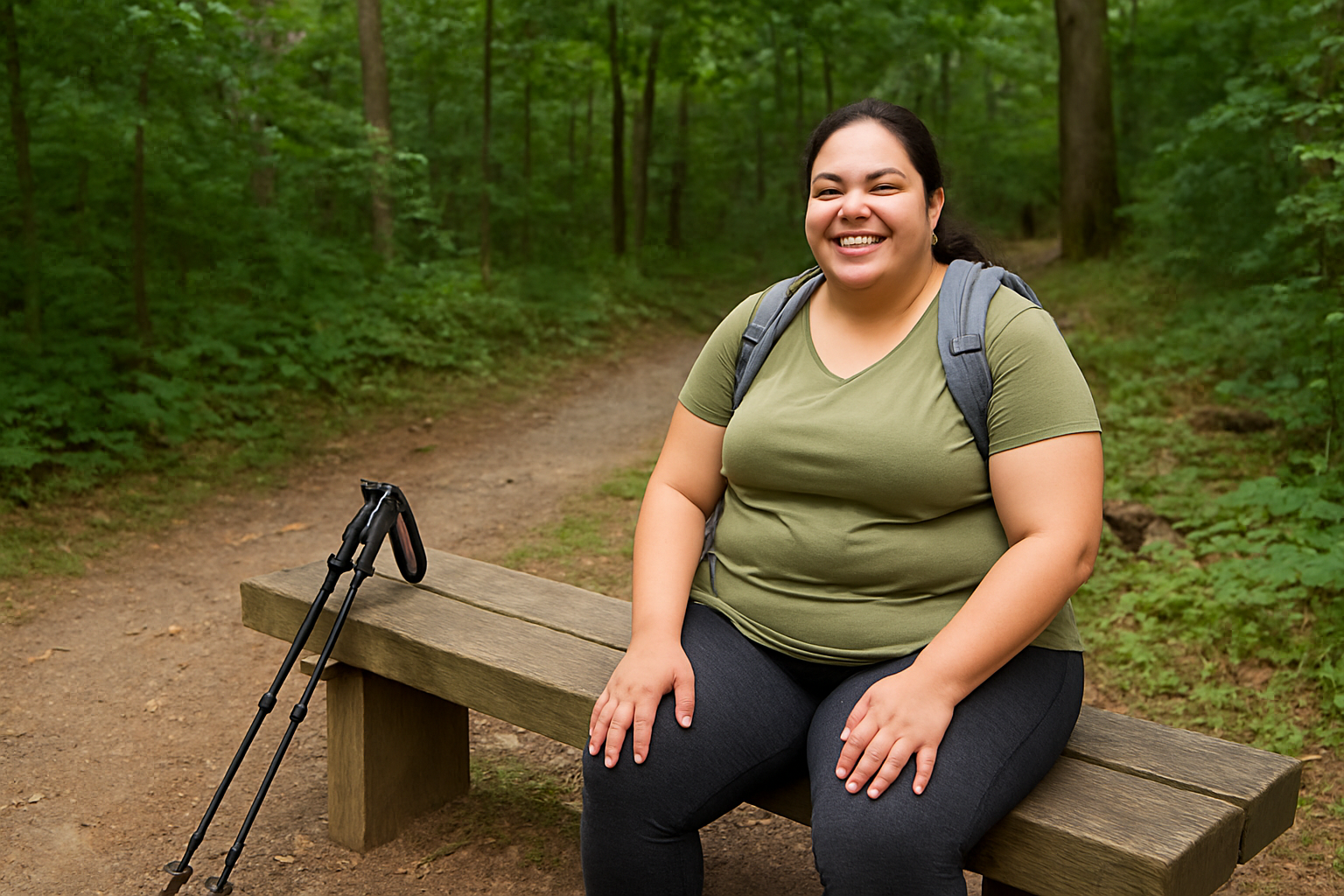
Hiking isn’t just for lean mountain athletes or ultralight backpackers. The truth is, the trails belong to all of us. If you’re carrying extra weight, stepping into the hiking world might feel a little overwhelming at first. Worries about stamina, joint pain, or keeping up with others are totally normal. But here’s the thing: with the right preparation, you can train your body to handle the trails and enjoy every moment out there.
This is your beginner-friendly roadmap: a guide for those who want to start hiking from where they are right now, without judgment, without pressure, and with the simple joy of moving through nature.
🦶 Start with Foot-Friendly Conditioning
Think of your hiking journey as a slow, steady build — like a campfire that starts with kindling before you add the big logs. Your kindling here is walking. Not a five-mile sprint or a race against your neighbor’s step count — just walking.
Start with 20–30 minutes, three times a week. Keep it at a pace where you can hold a conversation, but you’re still moving with purpose. If you have access to varied terrain — a local park, a slightly hilly neighborhood — even better. If not, a flat sidewalk or indoor track will still build your endurance.
When you’re ready for a first easy trail, consider Pioneers Park Nature Trail, Nebraska. It’s flat enough to keep you comfortable, but offers a taste of the outdoors that will remind you why you’re doing this in the first place.
If you want more tips on building stamina outside the gym, check out Hiking Endurance Without a Gym.
🏋️ Build Strength on Your Schedule
Hiking isn’t just about walking — it’s about climbing, balancing, stepping over roots, and sometimes hauling yourself up a slope. That means your muscles need some conditioning too.
The good news? You don’t need a fancy gym membership or a rack of weights. Bodyweight exercises like step-ups (on a sturdy bench or stairs), wall sits, and planks go a long way toward protecting your knees, hips, and back. Even chair squats — sitting down slowly and standing up without using your hands — will make a noticeable difference.
Set a goal of 15 minutes twice a week, and treat it like an appointment. The payoff comes on your first real hike, when you realize you can climb without feeling like your legs are on fire.
When you want to test that strength, try Anna Ruby Falls Trail, Georgia. It’s short, paved, and uphill — a perfect real-world “strength test” that rewards you with a stunning waterfall view.
🥾 Choose the Right Footwear & Gear
Here’s a secret that many beginner hikers learn the hard way: shoes can make or break your experience. If you’re overweight, that’s doubly true. The right pair of hiking boots or shoes will absorb impact, support your ankles, and keep your feet from screaming after just a mile.
Look for:
- Cushioned midsoles to soften every step.
- Ankle support for uneven ground.
- Breathable materials to prevent blisters.
Add trekking poles to your setup. They’re not just for “serious hikers” — they’ll shift part of your weight to your arms, help with balance, and make going downhill a lot easier on your knees.
For more guidance, you can dive into Dry-Wet Hiking Boots: What to Know or browse our Best Hiking Shoes for Beginner Women 2025 guide.
⏱ Set Smart Goals and Track Progress
It’s tempting to think, “I’ll hike five miles right away to prove I can do it.” But your best bet is to set goals that are so doable they feel almost too easy at first. That’s how you build momentum.
Maybe your first target is a half-mile nature trail. Once you can walk it without huffing too much, aim for a mile. Keep track of your hikes in a simple notebook or on your phone — jot down distance, how you felt, and anything you’d adjust next time.
Celebrate your wins. They might be small in miles, but they’re huge in progress. A great “goal hike” for early progress is the Silver Lake Loop, Utah — short, scenic, and perfect for building confidence.
Final Thoughts
Hiking isn’t about the size of your body, it’s about the size of your experience. You don’t have to wait until you “lose enough weight” or “get in shape” before you’re allowed to enjoy the outdoors. Start with short walks, add gentle strength work, invest in gear that supports you, and choose trails that make you excited to keep going.
Nature doesn’t care about your weight — it only cares that you showed up.
When you’re ready for more inspiration, explore our Easy Hike Guides for trail ideas or read Hiking and Confidence for a boost on those days you doubt yourself.