


Just a heads-up: this page may contain affiliate links. If you buy through them, we may earn a small commission at no extra cost to you. Learn more.
If you’ve just started hiking with trekking poles and feel soreness in your wrist or thumb, you might be experiencing a common beginner problem: hiker’s thumb. Understanding how to avoid hiker’s thumb is key to enjoying longer, safer hikes. This isn’t just about discomfort — poor grip technique can lead to inflammation or long-term strain. With a few adjustments to your form and gear, you can hike pain-free and more efficiently.
🪢 What Exactly Is Hiker’s Thumb?
Hiker’s thumb is a repetitive strain injury caused by overusing or improperly gripping trekking poles. It typically affects the tendons near the base of your thumb and can feel like a sharp ache or dull pain after a few miles. Beginners often tighten their grip too much or place weight incorrectly through the wrist, especially on uneven climbs like Skyline Trail in Massachusetts or Trail 3 at Turkey Run in Indiana.
✋ Lighten Your Grip — You’re Holding Too Tight
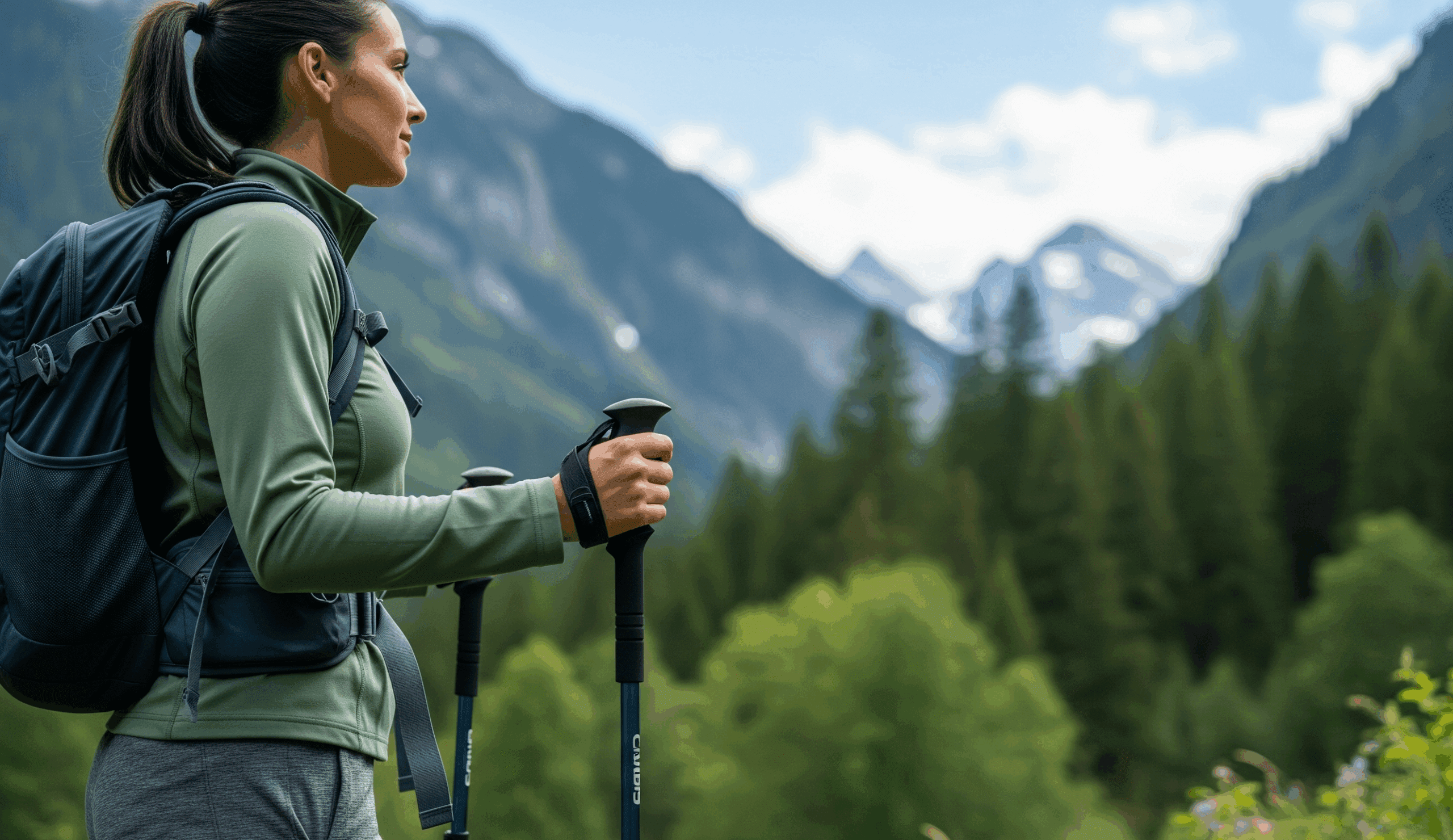
Your trekking poles are there to support, not to squeeze. The most common cause of hiker’s thumb is gripping the handles like you’re hanging on for dear life. Instead, your fingers should wrap loosely, and the straps should do most of the work.
Place your hand up through the strap loop and then rest it down onto the grip. This way, the strap supports your wrist and you don’t need a death grip. Think of the pole as a guide, not a cane.
🧍♀️ Posture and Pole Height Matter
Incorrect posture or pole height forces your body into awkward angles that strain joints. Set your poles so your elbows are at a 90-degree angle when standing on flat ground. This minimizes wrist flexion and helps you maintain a relaxed hand position.
If you’re on uneven terrain, adjust one pole slightly longer for downhill and shorter for uphill sections. Trails like Castlewood River Scene Trail in Missouri are perfect places to practice this while getting the benefit of sweeping views.
🥾 Trekking Poles: Choose Wisely
Not all poles are created equal. Poorly designed grips or heavy poles can increase stress on your hands and wrists. Ergonomic handles, padded straps, and lightweight materials make a big difference.
Before your next hike, check out our guide to the Top 3 Trekking Poles for Beginners for expert picks that reduce fatigue and protect your joints on any terrain.
💪 Strengthen Your Hands and Wrists Off the Trail
Preventing hiker’s thumb starts before you even hit the trail. A few quick exercises can help:
- Wrist circles and flexor stretches
- Thumb resistance drills using a rubber band
- Grip trainers like stress balls or therapy putty
Consistent stretching and light strength work, especially in the days leading up to a hike, go a long way in preventing discomfort.
🧠 Listen to Pain, Not Just the Miles
If you start to feel tightness, swelling, or pain — stop. It’s okay to take a break and reset your grip or form. Trails like Minnehaha Falls Trail in Minnesota offer great scenery even on shorter strolls, so take time to check in with your body and adjust as needed.
🏁 Final Thoughts: Small Adjustments, Big Relief
Learning how to avoid hiker’s thumb is one of those beginner lessons that pays off immediately. By adjusting your grip, improving your posture, and choosing better gear, you’ll hike longer and recover faster with thumbs intact.
And remember, discomfort is a teacher. Use it to refine your technique, improve your gear setup, and keep hiking strong.