


Just a heads-up: this page may contain affiliate links. If you buy through them, we may earn a small commission at no extra cost to you. Learn more.
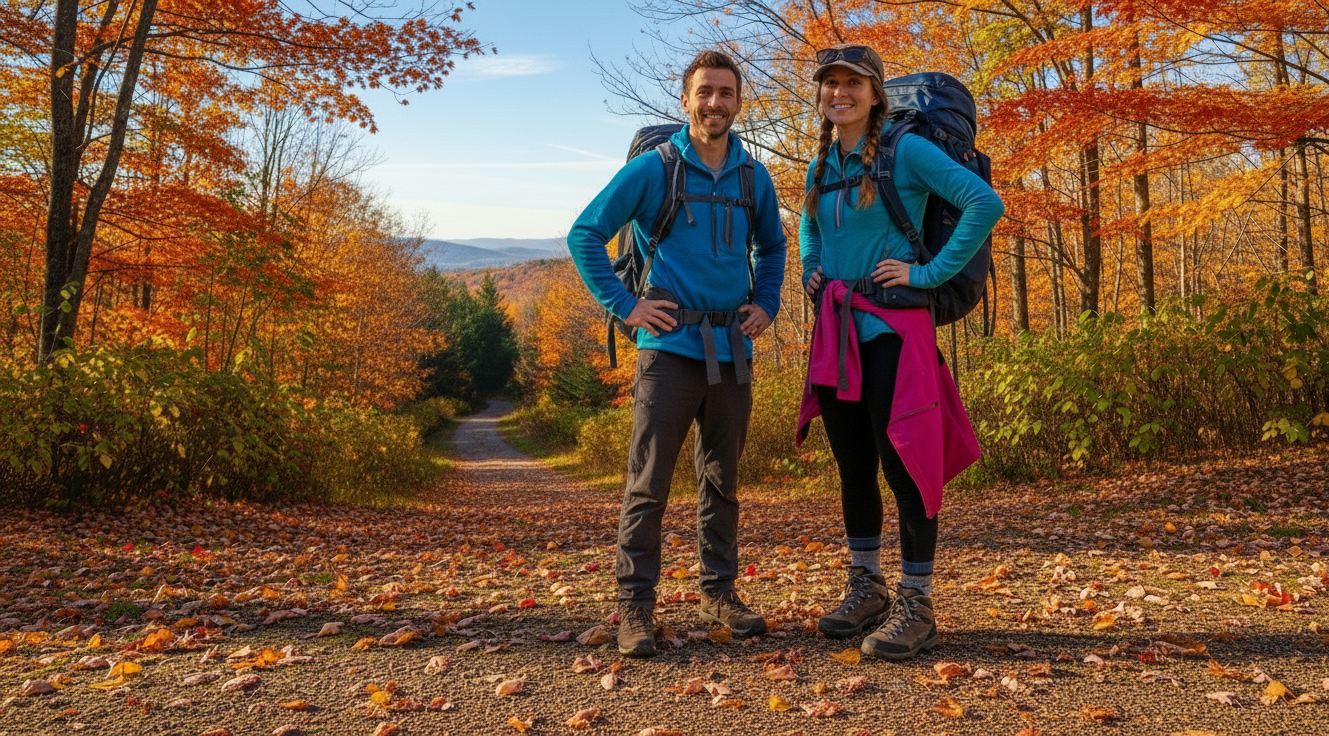
Hiking in fall feels like the outdoors giving you a softer, slower kind of permission. The cooler air, colorful foliage, and fewer crowds create the perfect setting for beginner hiking in fall. And those colors that change by the hour that make even short hikes feel cinematic! For beginners, autumn is one of the kindest seasons to learn: the bugs thin out, the trails are often quieter, and the days still hold enough warmth to be forgiving. This guide will help you choose the right clothes, pack smart, stay safe in shifting weather, and savor fall’s small, perfect moments on the trail.
🍂 Why Fall is Perfect for Beginners
Unlike summer, when heat and humidity can make even short hikes feel draining, autumn’s cooler air gives your body a break. You won’t need to worry as much about overheating and you’ll find yourself moving at an easier, steadier pace. Fall also offers a softer trail experience: mud from summer storms dries out and early frosts reduce bugs, leaving you with calmer, more pleasant outings.
The real highlight, of course, is the scenery. Trails that may feel ordinary in summer suddenly explode with color in the fall. For instance, the Minnehaha Falls Trail in Minnesota welcomes the season gently with a forested loop and a golden-leafed waterfall and it lets you stop, breathe and simply be in the fall color. Or consider the Crabtree Falls Loop in North Carolina, where heartwarming hues frame a cascading 60-foot waterfall with minimal effort. And if a slight climb with a big reward appeals, Mount Willard in New Hampshire opens out to fall’s full panorama in just a few miles. These beginner-friendly examples show just how special autumn can feel when you lace up your boots.
🧥 How to Dress for Fall Hikes
Layers are the quiet key to enjoying fall. Mornings often start cool and can warm by midday, so begin with a lightweight base layer that wicks sweat, add an insulating mid-layer you can unzip or remove, and keep a lightweight wind or rain shell in reach. Fabrics that breathe and dry quickly mean you’ll be comfortable as the temperature changes. Footwear matters too: dry, supportive shoes reduce blisters and let you wander confidently, while gaiters can help on leaf-covered trails. If you’ve been weighing gear choices, the essentials covered in essential hiking gear for beginners explain what truly matters.
🎒 Pack Smart for Changeable Weather
Fall can surprise you. A sunny morning can flip to wind or a brief rain in the afternoon, so pack like you plan to be out a little longer than expected. Keep snacks in an easy-reach pocket, carry a full water bottle (hydration is still important as temperatures drop), and stash a compact first-aid kit. The advice in what to pack for a day hike helps you balance weight with readiness. For longer or colder days, add a warm hat and thin gloves — they don’t weigh much and they make a big difference to comfort.
🧭 Safety: Watch the Weather and Your Limits
Autumn’s beauty can hide quick changes. Even on a clear day, wind and wet leaves can make footing tricky. Keep an eye on local forecasts, turn back if conditions worsen, and don’t push mileage past what feels sustainable. The guidance in how to stay safe hiking and when to turn back on a hike is especially useful. Presence and humility on the trail are as important as skill.
🌅 Make the Most of Shorter Days
Daylight shrinks in fall. Plan hikes that finish well before dusk, and carry a small headlamp in case you’re delayed. A simple trick is to estimate your pace conservatively and subtract a little time as a buffer. If you love gentle, luminous mornings or evenings, the beginner hikes for sunrise or sunset ideas can help you pick times that feel magical without stretching daylight thin.
🍎 Food, Hydration, and Recovery for Cooler Weather
Cool air can mask fluid loss, so sip steadily even when you’re not sweating much. Bring snacks that warm you up a little: a thermos of tea, nuts, or an oat-based bar feel right in fall. After your hike, simple steps like a warm drink, light stretching, and a protein-paired snack help recovery and keep the comfort going into the evening. For hydration basics and sensible snack ideas, see the site’s guides on hydration while hiking and hiking snacks for beginners.
🌲 Respect the Season and the Trail
Falling leaves are beautiful, but they can conceal roots and rocks. Pick stable lines, slow down on uncertain footing, and step lightly in ecological hotspots. Fall is also a time when wildlife routines change; give animals space and avoid surprises. Practicing good trail manners and paying attention to your surroundings will make every autumn outing safer and more rewarding. If you enjoy connecting the physical benefits of hiking with mental wellbeing, the piece on hiking and mental health underscores how seasonal walks support mood and clarity.
✨ Final Thoughts
Hiking in fall offers a gentle, forgiving classroom for any beginner. With a few thoughtful clothing choices, a compact pack, steady hydration, and attention to changing conditions, you’ll find the season invites both ease and wonder. Start small, notice the light, listen to the woods, and let the palette of autumn teach you a patient way to move. When you come off the trail, you’ll carry more than images—you’ll carry a quieter, steadier version of yourself into the week.